
slider
slider
slider
slider
slider
slider
slider

How We Fight Hunger

Food Bank

These are the programs and initiatives we’ve established to help us fight hunger. Programs that target everyone from schoolchildren to families to seniors. Here you can learn more about these programs—and how we’re working to prevent hunger each and every day.

Foodlink provides food to hundreds of non-emergency programs such as group homes and senior centers, helping non-profits agencies save vital dollars on their food budget so their scarce resources can be redirected to their programs. 

There’s enough food to go around. Every day, Foodlink employees, volunteers, and community members do their part to help ensure that mouths are fed and bellies are full.

BackPack Program™ 

What is the BackPack Program?

Nearly 78,000 children in our 10-county service area received free or reduced-price lunch at school. But when school is closed during weekends and holidays, many of those children go hungry. The BackPack Program from Foodlink provides children in need with bags of nutritious food they can discreetly take home and easily prepare on their own. 

During 2012-2013, we are serving nearly 1,800 children a week in 29 school districts.

Good nutrition is critical to good health and success at school. Children who don’t get enough to eat often have:

  • Trouble concentrating
  • Lower Math and English scores
  • Difficulty interacting with peers
  • Trouble finishing tests in time
  • Lower graduation rates 
 

How you can help

Donate to the program—just $160 feeds one child for an entire school year. That’s just $4 a week! You can choose to sponsor the BackPack Program at many levels: from covering one child for a month all the way up to sponsoring an entire school. 100% of your monetary donations go directly to buying, packing, and distributing food to hungry kids. For only $160 a year, you can feed one child on the weekend for an entire school year. Contact Laura Sugarwala at (585) 328.3380 x151 for more information. 

“I feel happy about the BackPack Program because it makes me and my family feel happy. Thank you for the BackPack Program!”-BackPack Participant

Become a BackPack site and help hungry kids in your school. Thinking about becoming a BackPack site? Some things to consider are: how students in need will be identified, how you will receive and store BackPacks, how they can be distributed discreetly, and who will be in charge of the program. Learn more about starting a program here. Contact Laura Sugarwala at (585) 328.3380 x151 for more information. .  

“More and more people are becoming aware of how this small program is making a great impact.  By the growing number of different volunteers from adults to children they are seeing first hand how many kids we are able to help and how the Backpack Program makes a difference for so many of our kids.”-District Coordinator

Mobile Pantry

A mobile pantry is a market on wheels, filled with essential, nutritious food items, that travels to locations to serve rural and under-served areas. Volunteers from the host sites help setup and serve clients. Our Mobile pantries allow us to engage a much larger circle of groups in supplying food to the needy, thereby increasing the number of people served, and extending service into regions that the food bank haven’t before been able to reach.

For the Monroe County Mobile Pantry schedule of locations: coming soon. 

For all other outlying counties Mobile Pantry schedule of locations: click here.

For more information contact: Matthew Knaub at (585)328.3380 x155 

$AVE Program 

$AVE is designed to increase self-sufficiency by helping individuals stretch their food dollars. Foodlink is able to purchase food items in large quantities at discounted prices and these savings are passed on to customers. Foodlink operates this service with member agencies through mobile pantries in our ten-county service area. There are no income guidelines or restrictions – anyone can participate at any time.

$AVE is focused on providing affordable meats, poultry and seafood because these grocery items tend to have the highest mark up at retail stores.

The Monroe County mobile pantry/SAVE schedule is coming soon.

The Outlying Counties mobile pantry/SAVE schedule is coming soon.

For more information contact: Matthew Knaub at (585)328.3380 x155 

Nutrition Education

Teaching nutritious eating for a lifetime of healthy habits.

Individuals in our community who have difficulty accessing an adequate amount and variety of safe foods are at the highest risk for negative health outcomes like obesity and diabetes. Children and adults who do not have enough healthy food can also suffer from inability to focus and may perform poorly in academic settings.

Foodlink is committed not only to providing food, but helping individuals learn more about what they are eating so that they can take control over their own health and wellness.  Foodlink uses the Dietary Guidelines for Americans and My Plate in sourcing, stocking, and distributing food, as well as in nutrition education classes.

Here our clients learn to grocery shop, cook, and eat healthfully—skills that can last a lifetime. 

Cooking Matters™

Foodlink is proud to be a Lead Partner of Share Our Strength’s Cooking Matters. Cooking Matters is nationally supported by the ConAgra Foods Foundation and Walmart.

Cooking Matters empowers families at risk of hunger with the skills, knowledge and confidence to make healthy and affordable meals. Alongside volunteer culinary and nutrition experts, course participants learn to select nutritious and low-cost ingredients, and prepare them in ways that provide the best nourishment possible to their families

Courses available through Foodlink include:

  • Cooking Matters for Adults  
  • Cooking Matters for Kids  
  • Cooking Matters for Families  
  • Cooking Matters for Teens  
  • Cooking Matters for Child Care Professionals  

If you are interested in hosting a class series, please download and submit a host site application to Foodlink

Upcoming Cooking Matters Classes

Cooking Matters for Kids at School #34

Tuesdays, January 29-March 12

Cooking Matters for Adults @ 441 Ministries

Wednesdays, February 27-April 10

Cooking Matters for Families at Community Place

Tuesdays, February 26-March 26

Thursdays, February 28-March 28

Cooking Matters for Teens at School #16

Mondays, March 11-April 22

For more classes and volunteer opportunities, check out the Cooking Matters Volunteer Opportunities Map.

 Volunteer for Cooking Matters

Chef Instructors provide leadership for course curriculum. Volunteers must have background in the culinary arts and/or restaurant experience.

Nutrition Educators help facilitate and guide the group. Registered dietitians, those with a nutrition or food science background, and dietetic interns are encouraged to apply. 

Class Assistants provide support and organizational assistance throughout the 6-week course.

Interpreters and Translators are a key source of connection between the course instructors and participants who are non-English speaking and/or from the deaf community.

Photo and Video Journalists will attend 2-3 Cooking Matters classes and produce high quality images and/or a video segment for marketing use.

If you are interested in volunteering, complete the online form here and select “Foodlink, Inc.” as the main Cooking Matters Partner, or send us a volunteer application.

Contact us

To learn more about becoming a host site, volunteer opportunities, or signing up for classes, contact Heather Tyler Nutrition Education Coordinator,at (585)328.3380 x123.

For more information about Share Our Strength’s National Program, visit www.cookingmatters.org or www.strength.org.

Just Say Yes to Fruits and Vegetables (JSY)

Foodlink offers the Just Say Yes to Fruits and Vegetables (JSY) Program to emergency agencies. The JSY Program began in New York in 1997 in order to provide nutrition education and obesity prevention programming to low-income clients of the emergency food network. It is funded through the state Department of Health and USDA’s SNAP-Ed Project. SNAP-Ed supports nutrition education for people eligible for SNAP (formerly known as food stamps).

The mission of JSY is to work together with organizations that serve food insecure populations to improve the health and nutritional status of SNAP-eligible populations in New York State. We do this through promoting fruit and vegetable consumption and empowering clients to make healthy choices.

Foodlink offers JSY classes to our emergency agencies, like food pantries and soup kitchens. Each class includes a nutrition lesson and activity, a cooking demonstration, and healthy recipes to taste. To request a class, contact Omy Rodriguez, JSY Nutritionist, at (585)328.3380 x165. To learn more, visit www.jsyfruitveggies.org

KidsCAN

(Cooking, Activity, and Nutrition)

Foodlink partners with schools and summer programs to provide nutrition education and cooking demonstrations to Rochester children. Each KidsCAN session, taught by a Foodlink nutritionist, includes a nutrition lesson, nutrition games, and physical activity, and a kid-friendly recipe cooked and eaten as a group. Lessons focus on food variety, how food is grown, making healthy decisions, and the food environment. Each KidsCAN session includes a nutrition lesson, nutrition games and physical activity, and a kid-friendly recipe cooked and eaten as a group.

Interested in Volunteering?

KidsCAN needs volunteers to help run classes, cook, and teach. If you have experience in nutrition or cooking, or you just like to work with kids, please contact Larkin Kimmerer at 328-3380 ext. 154. 

Interested in hosting a KidsCAN class?

If you are interested in having KidsCAN visit your program, or if you are interested in other nutrition demonstrations, please fill out the KidsCAN Sign-Up Form and send it via fax it to (585) 328-9951.

Eating and living well

Foodlink is committed to providing access to safe, healthy, nutritious food. For more information about the impact of food insecurity on nutrition, refer to The Academy of Nutrition and Dietetics position paper Food Insecurity in the United States

Supplemental Nutrition Assistance Program (SNAP)

What is SNAP?

SNAP, formerly known as food stamps, is a federal nutrition program that helps you stretch your food budget and buy healthy food. SNAP benefits can be used to purchase food at grocery stores, convenience stores, and some farmers’ markets and co-op food programs.

The SNAP Outreach Program 

Foodlink’s SNAP Outreach Program is a great way for your agency to further help the community. The average monthly SNAP benefit for a household is $289. SNAP benefits offer more food assistance than Foodlink or your agency is able to give families each month. Our Outreach program aims to increase program participation direct service at our scheduled SNAP clinics, over the phone application assistance, as well as a simple training program for agencies to provide basic SNAP assistance.

Click here for a list of our Outreach Clinics.


SNAP training program

The training program teaches agencies about the SNAP program and the variety of ways they can help increase participation. Training sessions are tailored around your own agency needs and can be done on an individual basis. Sessions can include but not limited to basic program information, training on application assistance, and training on pre-screening. 

To learn more about SNAP training, contact our SNAP Outreach and Assistance Coordinator, Jerome Nathaniel : (585)328.3380 x150.

Freshwise Kitchen

Nourishing kids with good food.

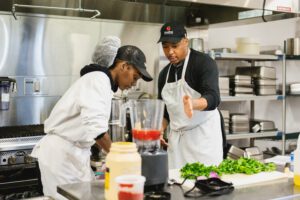
We give provide kids with hot, nutritious meals so they can spend their time playing and learning—not worrying about where their next meal will come from.

Kids Cafe

The Kids Cafe Program was established to provide healthy meals for children in a safe after school environment. Currently, Foodlink provides meals to 3,000 children every weekday during the school year at 58 Kids Cafe sites.

Contact us

Fill out an application today to become a Kids Cafe member site. For more information contact Mark Bailey at (585)254.4423. All applications must include a copy of OCFS licensing.

Summer Meals

Freshwise Kitchen’s Summer Food Service Program (SFSP, also known as Summer Meals) provides meals to children who eat free or reduced price lunch during the school year. Over the summer, however, these children are at risk of hunger. For seven years, Freshwise has partnered with the NYS Department of Education to ensure children eat at least one balanced meal every day in summer. In 2012, Freshwise served more than 3,000 children at 68 locations in Rochester.

 Hunger does not take a vacation. When school lets out, many children don’t know where their next meal will be. The Summer Meals program is free to all Rochester children.  A recent CGR report found 16,000 Rochester kids were not participating.  Foodlink prepares and distributes all the food to feeding sites for free.  But, there needs to be more sites.

Do you know of a program for children in Rochester that would like to serve food? A camp, vacation bible school, or a club? Many organizations are eligible for the Summer Meals program but don’t know it.  

The deadline to sign up is May 24th.  Click here for an application.


For more information on Summer Meals or to become a registered site please contact Mark Bailey at (585)254.4423.

Freshwise Catering

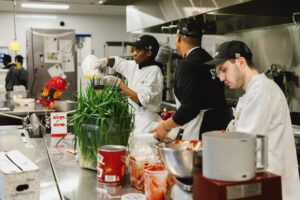
Our catering division creates delicious spreads using fresh, local, and seasonal foods. The best part? All proceeds go towards ending hunger in our community. Take a look at our catering menu for details. 

For catering information, contact Dave Ward, or call (585) 254.4423.

Freshwise Catering Brochure (.pdf)

Value-Added Processing

During the summer of 2012, we will begin a new initiative by implementing a value-added processing (VAP) program to extend the shelf life of local agricultural products.  Our VAP program will include workforce development training, as we teach individuals valuable skills in the preparing, processing, packaging, and marketing of raw local products.  The final products of this program—a trained workforce and shelf-stable products—will benefit both producers and consumers in our regional food system.

For more information contact Dave Ward at (585)254.4423.

Workforce Development

Helping people get back to work.

Great things happen when people find jobs—they also find confidence, income, and the sustainable means to put food on the table. 

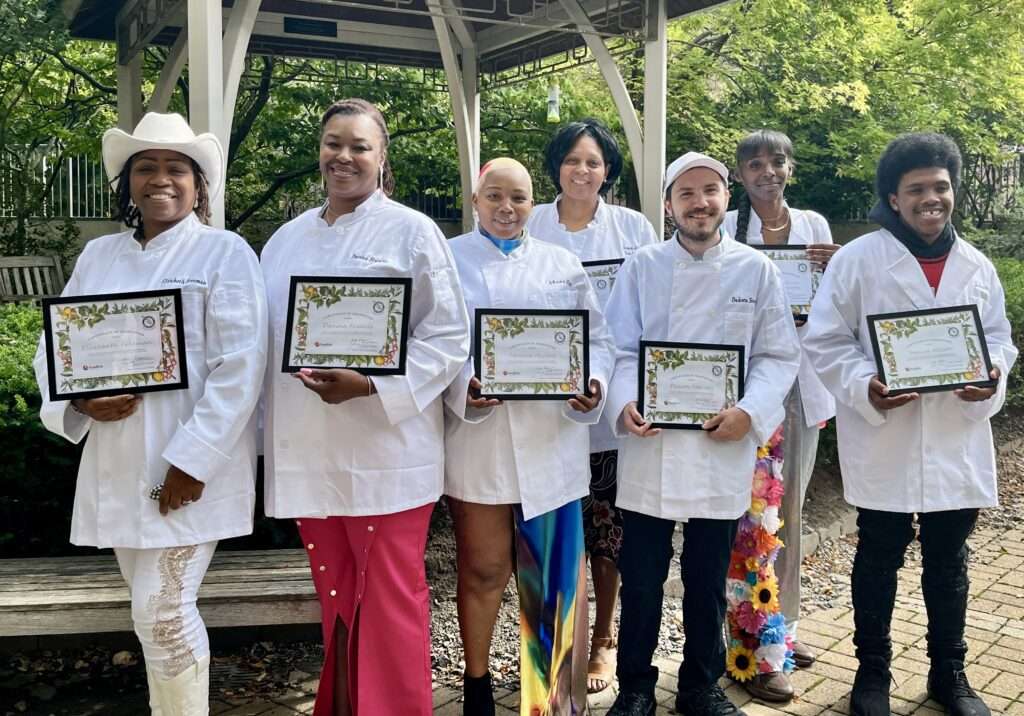
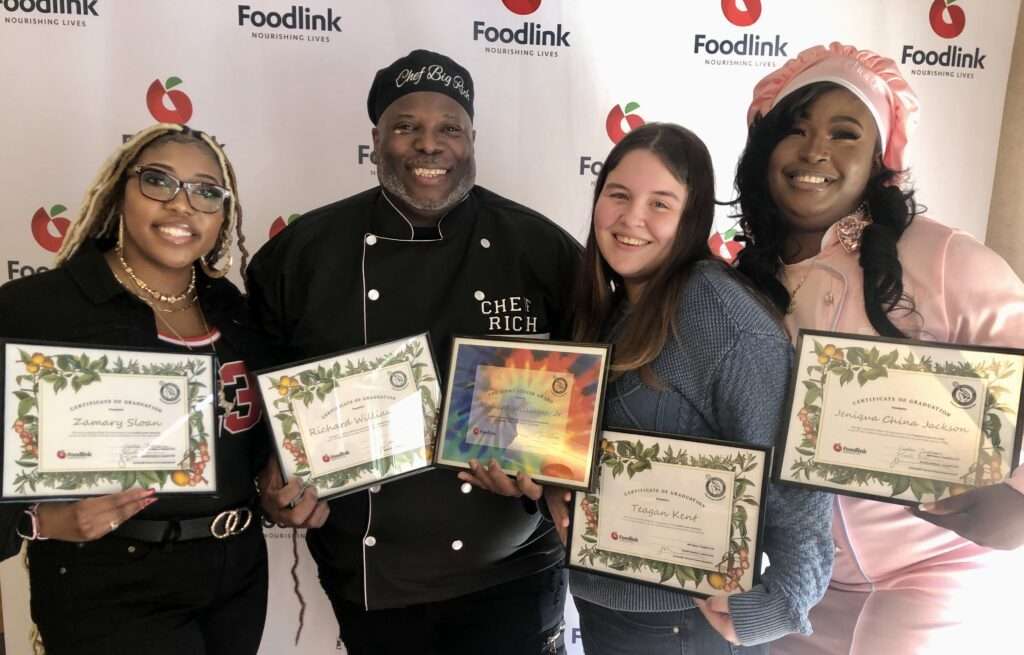
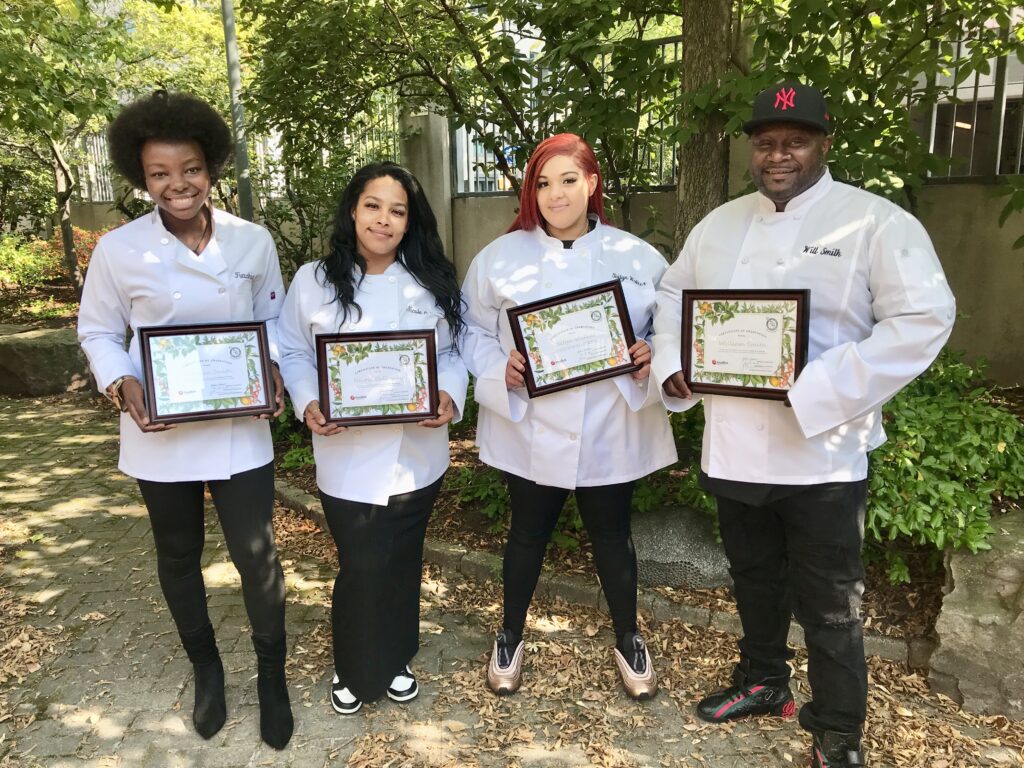
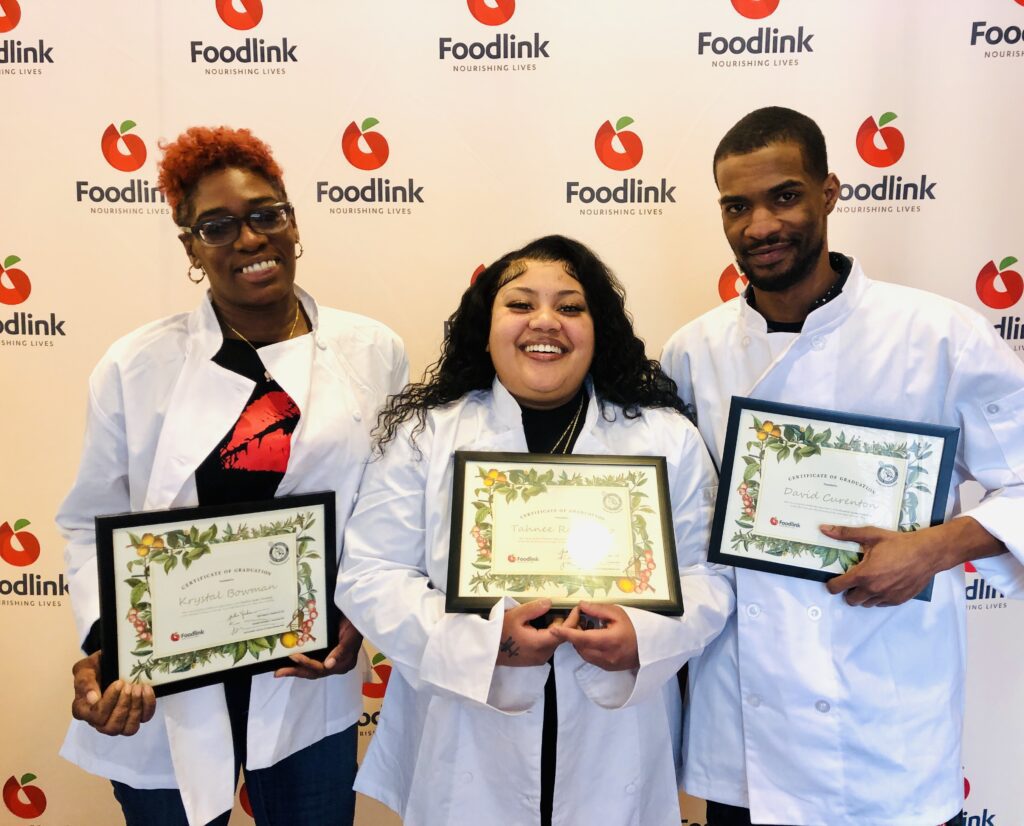
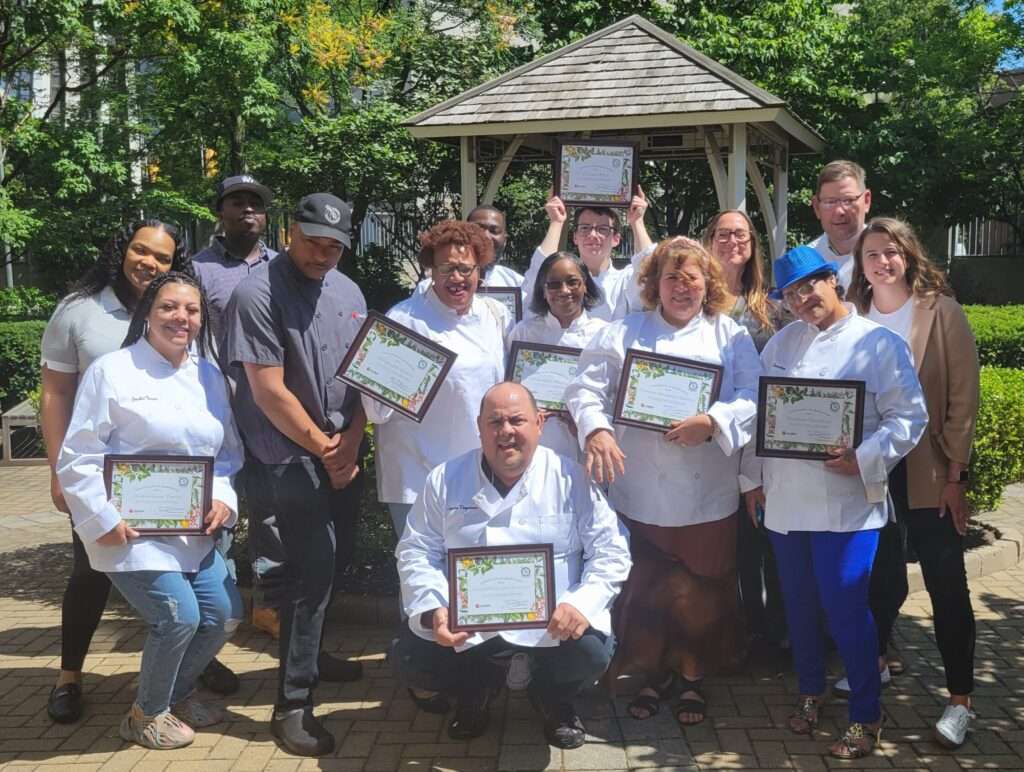
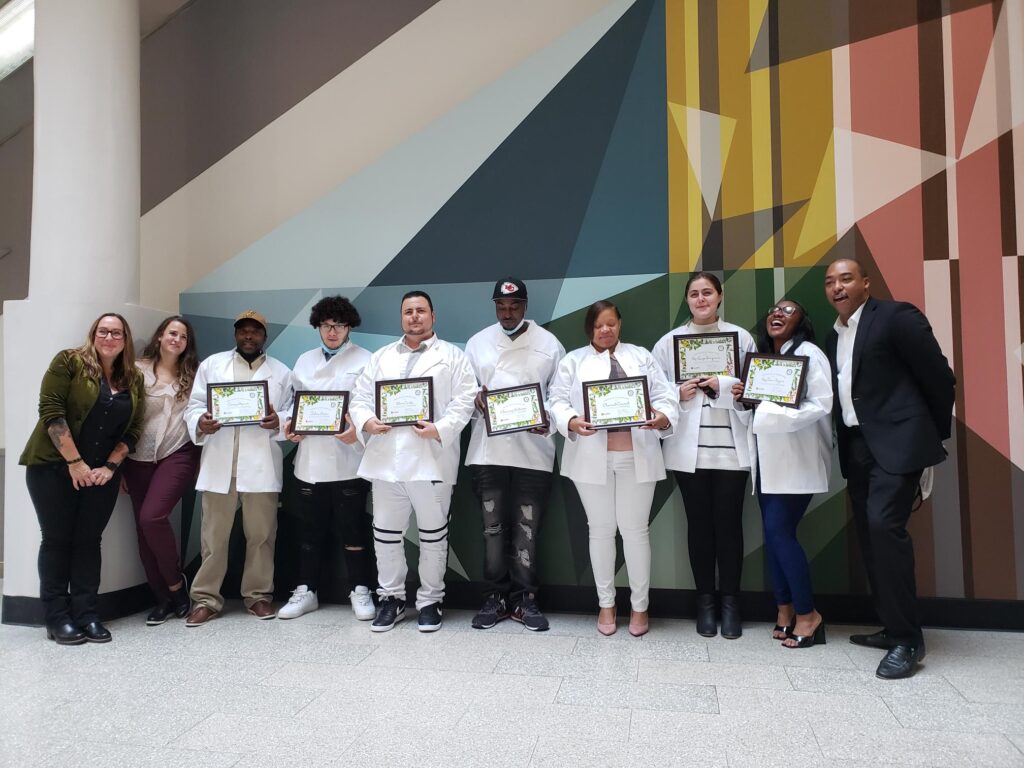
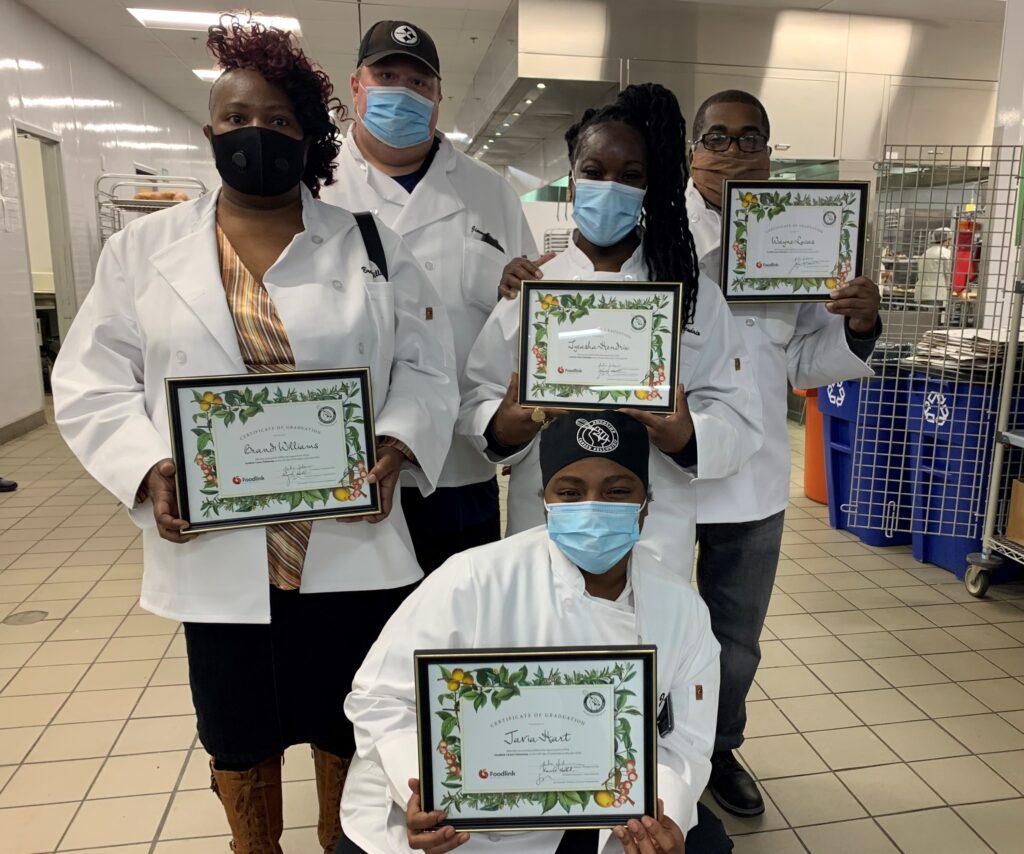
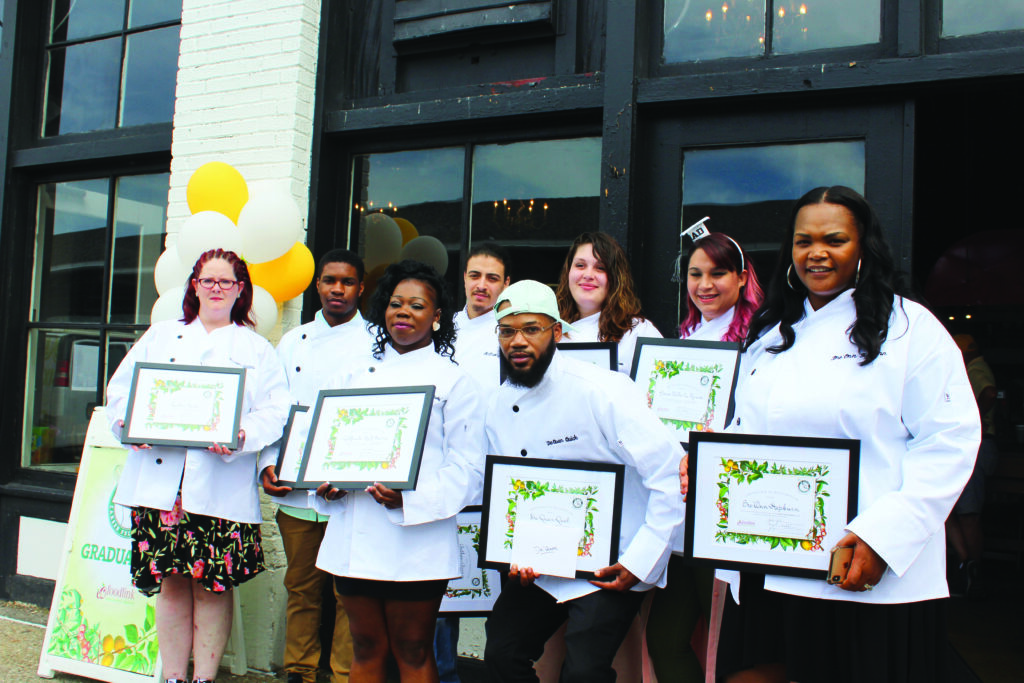
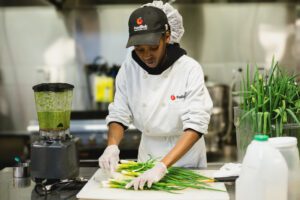
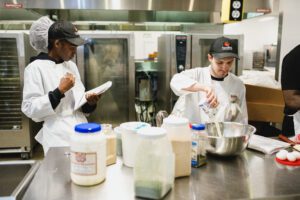
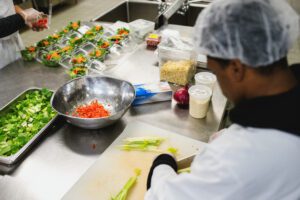
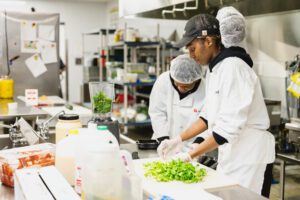
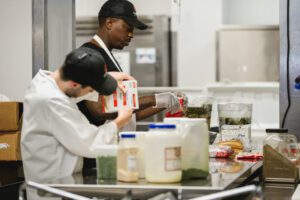
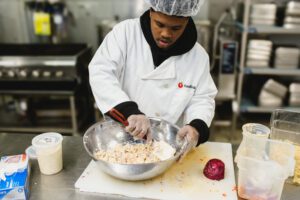
Foodlink launched a job training program through our Value Added Processing initiative during the second shift at Freshwise Kitchen. Six participants have recently completed the four week training cycle and are preparing for job placement at one of the many food processing companies in our region. We are preparing to enroll six more participants for another cycle. This is one example of how Foodlink can lend the excess capacity of our resources to job training and work force development.

 Foodlink also works with individuals through the Work Experience Program (WEP) every day in our food bank. The rerouting of the RTA bus line to include multiple stops at Foodlink’s Mt Read location has been instrumental in ensuring that Foodlink is an accessible partner in workforce development. Our WEP placement helps impart skills such as communication, timeliness, sense of urgency, and food industry standards. WEP participants are an important part of our day-to-day food banking and help us move over 6 million pounds of donated food each year.

Green Initiatives

Doing our part to help save the planet. We’re not just fighting hunger. We’re working to do it environmentally responsibly.
 

Urban Farm Stands  

Access to fresh produce is key to fostering a healthy community. We assist with 10 farm stands throughout the City of Rochester. Unfortunately due to our seasonal weather, Urban Farm Stands only run during the months of May to October.
 

Garden Project

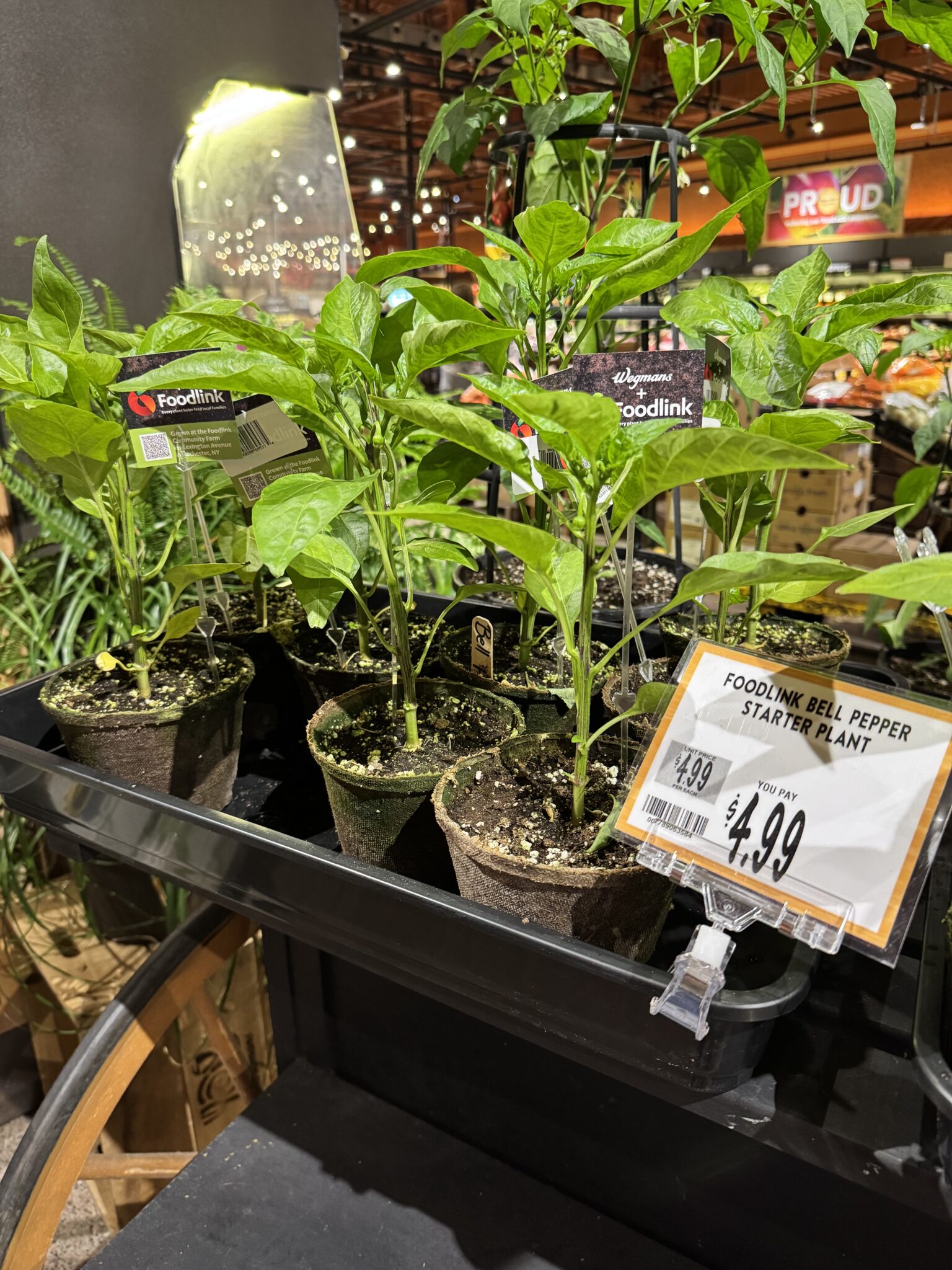
At Foodlink, we are always working to increase and expand access to fresh, wholesome, and nutritious foods throughout our service area. We run many projects to achieve this goal, including the Garden Project, which links community gardens to the emergency food network, our series of urban farm stands, and our preliminary work on making corner stores healthier. The Garden Project will also make it possible for emergency food relief organizations to grow their own garden so that they can produce fresh fruits and vegetables to be used for emergency food recipients. This project is open to Foodlink member agencies. For more information, contact Bryan Babcock or call (585) 328-3380 x145. 
 

Epiphergy

Epiphergy, one of Foodlink’s green initiative partners, is leading the organic fuel revolution in our region. The Epiphergy Organics Processing Corp is designing and operating the first organic-waste-stream-to-ethanol processing center. Up to 20% of food donated to Foodlink is either not fit for human consumption, or does not meet New York State nutritional guidelines. Because of our partnership, this waste is now being supplied to Epiphergy to aid in ethanol production. Click here to learn more about Epiphergy.
 

Green Living Technologies

Green Living Technologies (GLT) manufactures, designs, and installs vegetative green roofs and walls, and their patented technology for vertical growing and rooftop gardens is providing new horizons for our urban agriculture initiatives. Our partnership with GLT has enabled the installation of green walls at our facility on Joseph Avenue and Exchange Street. Click here to learn more about Green Living Technologies

Food Hub

According to the USDA “a food hub is a centrally located facility with a business management structure facilitating the aggregation, storage, processing, distribution and/or marketing of locally produced food products.” The USDA Agricultural Marketing Service has created a task force focused on the creation of food hubs nationwide. They have identified the following core functions of a food hub:

  • Aggregation: A Food Hub needs to have the space, assets, and bandwidth to aggregate mass quantities of local farm product
  • Active Coordination: A Food Hub needs to be able to coordinate supply chain logistics through a sophisticated inventory system, allowing both producers and consumers easy use.
  • Permanent Facilities: Food Hub must provide the space and equipment for food to be safely stored, lightly processed, packed, palletized, and possibly sold under a regional hub label.
  • Community Space: A Food Hub should also serve as a terminus for wholesale and retail distribution of foods, provide space for the provision of health and social services, and possibly offer other serviced including community kitchen space and office space for health and human service providers. 

Why Foodlink would make an ideal Food Hub

Despite being an agricultural center, neither Western nor Central New York has a true Food Hub. Foodlink is well positioned to use its already existing assets and resources to be the Food Hub here. We will use our assets and strong partnerships with farmers to gather and distribute product throughout our 10-county service area. We can support farmers by purchasing surplus, unsold, and unharvested product. We can make this a hassle-free experience, and ensure that quality local product reaches as many people as possible.

In addition, the Foodlink organization has remarkable assets and resources, such as:

936 Exchange Street:

  • 100,000 square feet of space with:
  • 32,000 cubic foot freezer with 210 pallet positions
  • 40,000 cubic foot cooler with 170 pallet positions
  • Thousands of cubic feet of dry storage space
  • 5 loading docks
  • Pallet jacks and forklifts
  • Ample office space and
  • Conference rooms
  • Parking lot with 50 spaces 

138 Joseph Avenue:

  • 60,000 square feet of space
  • Commercial kitchen
  • Producing 3,500 meals per day for various organizations
  • Also houses a private company dedicated to recycling food waste to Ethanol.

1999 Mt. Read Blvd:

  • 80,000 square foot warehouse
  • 3,700 square foot cooler
  • 5,200 square foot freezer
  • This building operates as our distribution center where we move 13 million pounds of food annually.

Transportation Assets:

  • 53-foot refrigerated tractor trailer
  • Three 26-foot refrigerated straight trucks
  • Four 22-foot refrigerated straight trucks
  • One 14-foot refrigerated straight truck
  • Two non-refrigerated pickup trucks
  • Two non-refrigerated vans

Operational Assets:

  • Foodlink is the food bank for 10 counties in western and central New York: Allegany, Genesee, Livingston, Monroe, Ontario, Orleans, Seneca, Wayne, Wyoming,Yates

Within our 10-county service area we partner with 450 human service agencies to move 13 million pounds of food annually. This requires sophisticated software and internal bandwidth for:

  • Inventory
  • Deliveries/Pick-ups
  • Accounting and billing

Programmatic assets:

Foodlink emphasizes the importance of workforce development throughout all activities. A Food Hub will allow Foodlink to continue to train workers and create jobs in several different parts of the food system.